Powered By Blogger

Tuesday, 5 May 2015

Airing Cupboard Re-modelling Job

The wall had to be carefully cut to size before being made good to.

 This was a former airing cupboard within a bathroom. Our customer wanted a shower in her bathroom but didn't think it possible. It was.
We removed the door, door casing & architrave. The cupboard was then split in half with some timber studding. The other unseen half houses a central heating boiler and is now accessed by a door in the room behind.
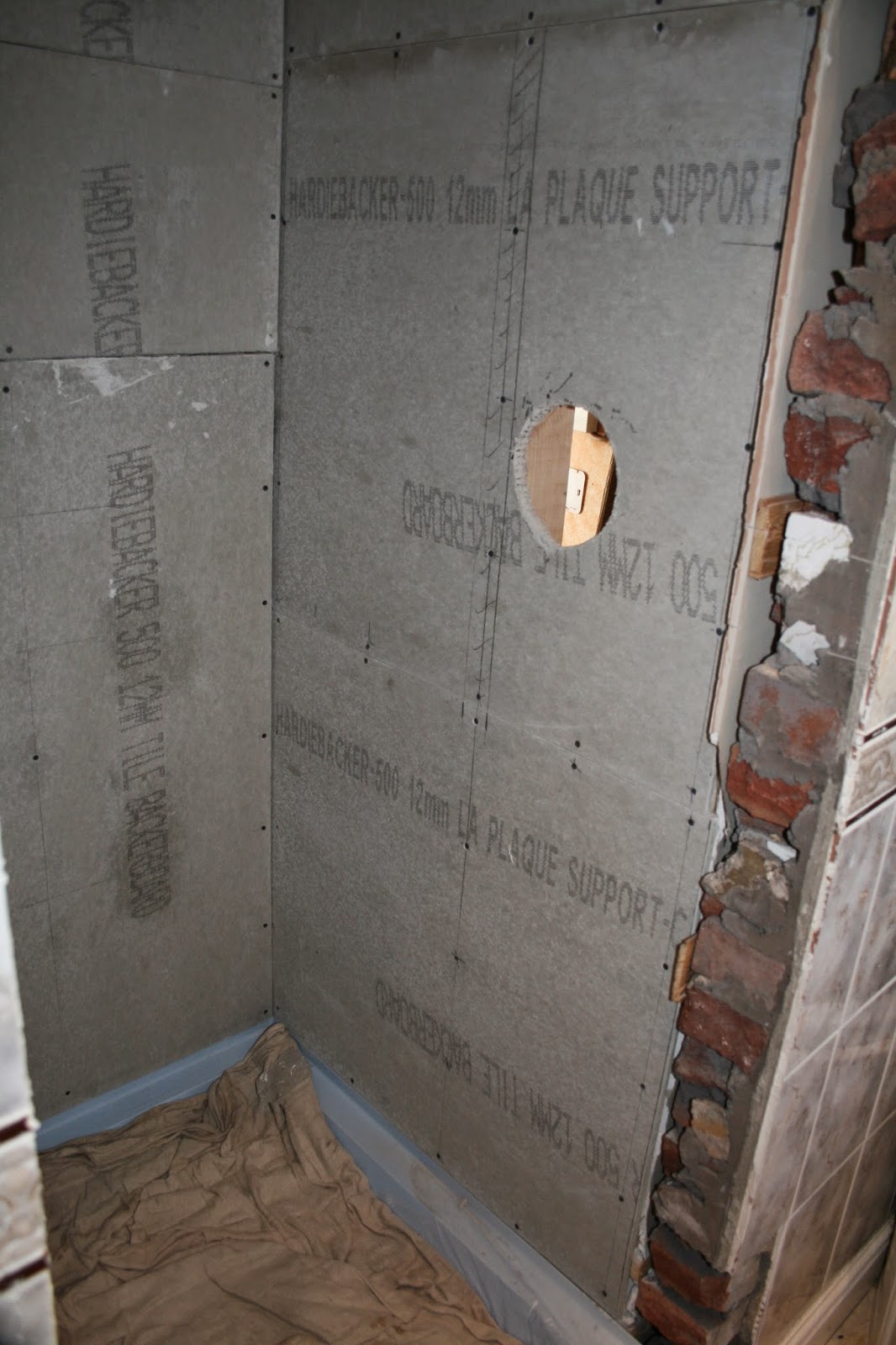
A Mira 'Flight' shower tray with upstands was fitted and the walls boarded with 'Hardibacker' tile board. We had to be very careful not to damage the existing tiles as there were no spares.

Mira 'Discovery' built in shower with variable rail kit.

The natural stone tiles have been laid in a brick bond style on waterproof adhesive and sealed with waterproof grout. 

The dimensions of the tray are 800mm x 1000mm

The tiles go over the up-stand of the tray making it water tight before it is even sealed in.

Here's the finished job with the Mira 'Leap' pivot door in place and a new piece of matching skirting board across the front.

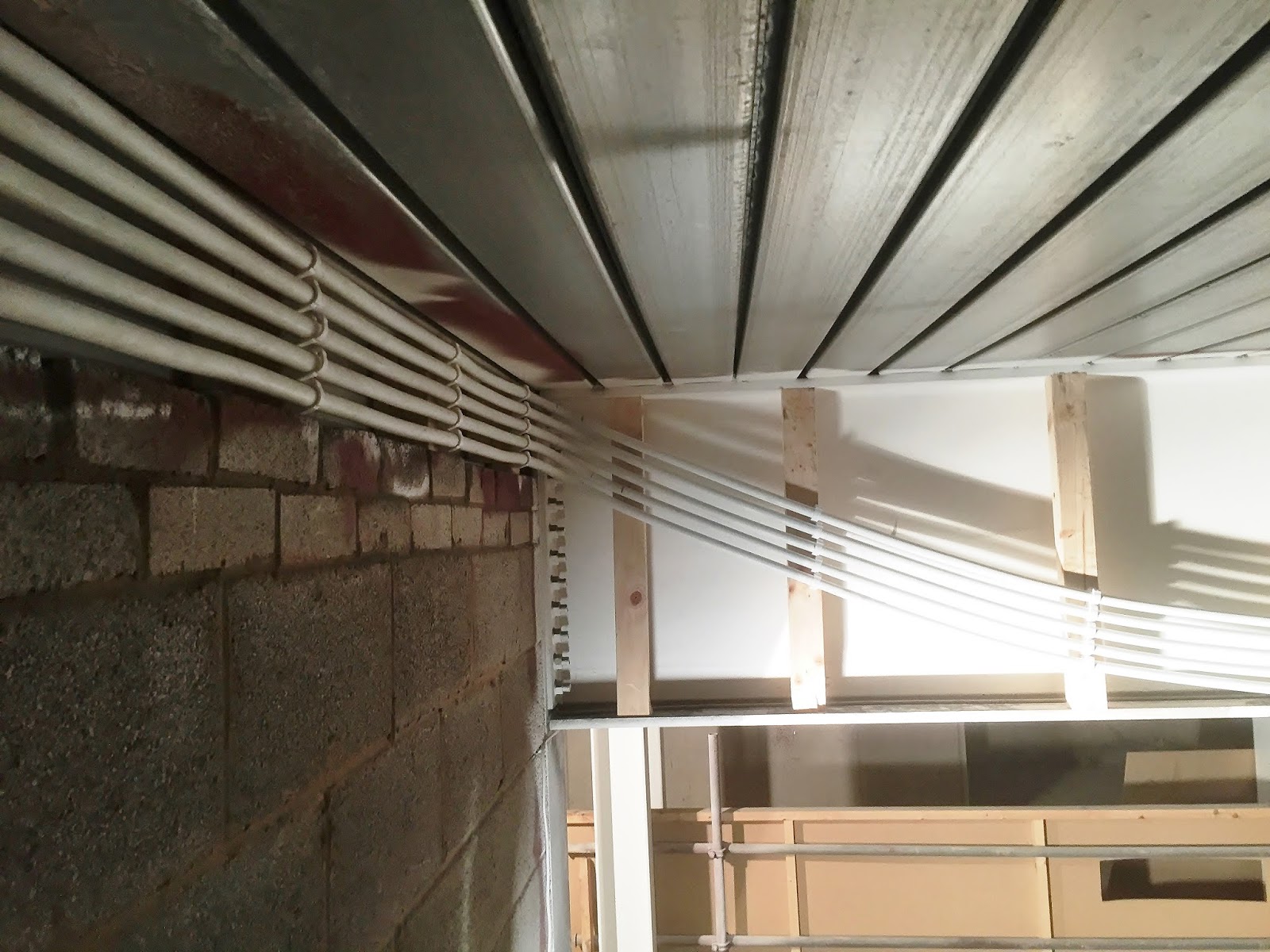
 The last picture is looking upwards at the ceiling. This was lowered and finished with a 12mm 'Fermacel' board. This can be painted directly onto without the need for wet plastering. Our electrician fitted an extractor fan ducted to outside and an LED light. The other fitting in the top of the picture is a sensor which eliminates the need for a light switch. As anyone steps into the shower the light comes on. When they step out it goes off. The extractor then carries on running for a couple of minutes to ensure all steam is removed.

If you'd like to discuss any such projects please do give us a call. We do all of the work ourselves with the exception of the electrics. We manage / programme the electrics but our NICEIC approved contractor carries it out.

Thursday, 12 March 2015

The Importance of Annual Boiler Servicing

The picture shows a flue turret off a high efficiency boiler which is only about eight years old. The red arrow indicates a hole in the metal alloy inner duct just above where it connects to the boiler.This is the duct which conveys the products of combustion to outside whilst the outer duct conveys fresh air into the boiler for combustion.
We had been engaged to carry out annual servicing on this boiler and eight others the same as it,
in a block of flats for a commercial client. Prior to taking the case off this boiler we took a 'before' reading with our flue gas analyser and immediately picked up high levels of CO, at over 7000PPM {parts per million}. Luckily this deadly gas was being conveyed to outside atmosphere but had a case seal failed on the boiler the consequences could have been deadly.
The boiler was producing this CO because the flue gases from the burner were mixing with the fresh air being drawn through the air duct for combustion via the hole in the inner duct. The hole has been caused by the corrosive nature of condensate present in the flue gas.
Our client who we have an excellent and long standing working relationship with, demands the highest levels of gas safety in their properties. As such we went straight ahead and replaced this flue and got the boiler working safely again. As a result of this incident the flues on all of the other boilers in these flats have been renewed as a matter of precautionary / preventive maintenance.
These boilers have been meticulously maintained and serviced every year. I know this because it is us who have done it. The moral of the story is always keep up with your servicing. On many occasions everything may be working safely and efficiently and there is little to do. Many homeowners and landlords could almost be excused for thinking "Why am I paying for this?" Well it's incidents like this, on well maintained boilers, that prove how invaluable annual servicing is. It also shows the importance of using flue gas analysers. If you have any questions or require advice on servicing matters please don't hesitate to contact me.

Friday, 30 January 2015

Cloakroom Make Over

We gave this cloakroom W.C. a full make over. It had previously been quite basic as many of these rooms are. It was only part tiled with plain white tiles, a tiny wash hand basin on brackets and a close coupled toilet. It was functional but unattractive.
 We stripped all the old fitments out and made good to the walls and floor. All pipes were then concealed before tiling. The new oak furniture was chosen as it creates storage space for towels and cleaning products. The skirting boards, architrave, door casing and door are all hardwood oak to match the furniture. The basin is long and trough styled making it big enough to use yet still space saving.
 The toilet is a back to wall style pan with the cistern concealed within the furniture and operated by a push button. A toilet roll holder and storage unit have been incorporated to fill the available space.
 If your cloakroom W.C. is lacking something or you'd maybe  like to convert a cupboard into one then we can help you. Feel free to contact us if you wish to discuss any such projects.

Commercial Building Water Main Manifold

This is the incoming water supply in the basement of a commercial premises in Liverpool city centre. It is 108mm copper pipe. There was a further 1 metre section of 108mm copper connected to the outlet of the gate valve which we disconnected. The cost to join onto this large bore copper tube with copper or brass fittings was prohibitive so we had to come up with an alternative solution.

 The building is getting divided up into office units on the upper floor and a restaurant on the ground floor. Each unit will need its own metered water supply. This manifold kit by Plasson proved the perfect solution.

Add caption

Add caption
Add caption
If you have any queries regarding commercial water supplies please don't hesitate to contact us.

We've recently routed the outgoing pipework from this manifold to the five units within the building

It's been done in continuous lengths using 22mm Tectite metal pipe with just some copper by the meters.

Monday, 24 November 2014

Commercial Washrooms

This was a slightly unusual job as it is only going to be a temporary site toilet for building contractors within a university student accommodation building project which is just starting. This is why there are no tiles on the walls or floors. There was already a wash basin and toilet in situ so we completed the job by fitting this 1800mm stainless steel trough urinal.
 Note the rodding point on our waste pipe for future ease of maintenance.
 This is a basic hydraulic flushing valve. It is a water saving device. Every time someone uses the basin tap or flushes the W.C. it senses the change in water pressure and admits some water into the cistern serving the urinal. The regularity of the urinal cistern flushing is therefore governed by the amount of people using the washroom.
 There she goes; the first flush during our commissioning! If you'd like any information on commercial sanitary products or water saving devices please do give us a call.

Thursday, 25 September 2014

Contract Bathrooms

As well as doing 'high end' type bathrooms we also do lots of what are termed 'contract' types. These are usually for housing associations or private landlords. Here's some pictures of one we recently completed.
The old suite and tiles were completely stripped out. The walls were made good to and fully retiled. The floor was also tiled. The electric shower is a Triton T80Z, 8.5KW model. It is fitted over the bath with a bath shower screen to contain the water. Note the correct arrangement of the unit and the sliding rail. The shower should always be on the nearside so it can be switched on from outside of the bath without getting a soaking. The hose and handset should always finish up in the centre of the wall. To do this the sliding rail needs to be slightly off centre.

The bath is a Twyfords 'Neptune' twin grip, anti slip model in pressed steel. Taps are lever style 1/4 turn for ease of use. When the bath is fitted, leveled and secured we fill it with water and seal it to the plaster of the wall. This is the first seal and it will be hidden. After the tiling is complete we do a finishing seal to the tiles, again with the bath filled. We only use top quality silicone sealant by Dow Corning and never your 99p DIY store stuff! All tiles are bedded on waterproof adhesive and sealed with waterproof grout.A bath fitted in this way will never leak at its junctions with the tiles. 


The basin is from the Twyfords 'Option' range. It is fitted after the tiling is complete so there are no unsightly cuts.

The W.C. is again from the Twyfords 'Option' range and is quite compact as it had to fit into this alcove. The drain coming up from the floor was off the wall which in turn would have brought the toilet off the wall. We see many like this where the installer has fitted an unsightly wooden batten behind the cistern to make up the gap which looks awful. As the drain couldn't be altered on this job we studded the wall out and plaster boarded it to bring it to the correct distance. The cistern now sits perfectly on the tiles.

Friday, 22 August 2014

Our Latest Bathroom Refit

We gave this bathroom a full refit for our discerning customer who had wisely selected high quality products. The old suite and tiles were completely stripped out and the plaster work was made good to, in readiness for tiling. The shower is a built in Mira 'Discovery' with a variable rail kit. A Kudos 'Inspire' two panel shower screen keeps it all water tight. The bath is an Ideal ' Marina' 1800mm model which is slightly longer than standard for extra room and comfort. The semi recessed basin is from the Ideal 'Soft Mood' range and sits in a 650mm basin unit which provides storage space. All work was carried out by us except for the electrics to the new light and extractor fan which our approved electrical sub contractor done. If you'd like to know more about the best bathroom products {what to buy / what not to buy and all the other secrets} from someone who's been in the trade for 34 years please do not hesitate to contact me.


 Ideal 'Tempo' close coupled W.C. 
 Stelrad 'Concord' 1186 x 450mm white towel rail


Thursday, 3 April 2014

New Water Main In A Factory.

 This is a new water main we installed in a factory site yesterday. Due to the foundations of the building the main couldn't be routed under the building and in through the floor.
Instead we used a product called 'Groundbreaker' developed for these very situations.

Our first job was to drill a 100mm hole through the wall using a diamond core bit. We first started using these diamond cores about twenty five years ago. You can buy a full set now in a case for what we were paying for a single bit back then. They have come right down in price but there are some poor quality ones out there that don't last. They might be OK for the DIY man but won't stand the rigors of trade use.


Once drilled a wall sleeve is fitted, then a ribbed duct pipe with 90mm insulation. The back plate is then fixed to the wall. A 'hockey stick' type pre formed piece of M.D.P.E. pipe is then fitted through the wall.
The back plate has a two piece insulation panel the covers the pipe. In this photo the top piece hasn't been fitted for illustration purposes.

Due to the entry height in this factory we've had to join together two ducts to give full coverage. The duct should idealy go to the bottom of the trench in which the pipe is layed. This isn't possible here due to the type of foundations so insulation has to be fitted to the pipe between the base of the trench and the start of the duct.

As Water Industry Approved Plumbers we are always happy to advise on matters like this and interested in quoting for any such water main related work.

Friday, 21 March 2014

Fitting a Gas Fire in Rented Accommodation

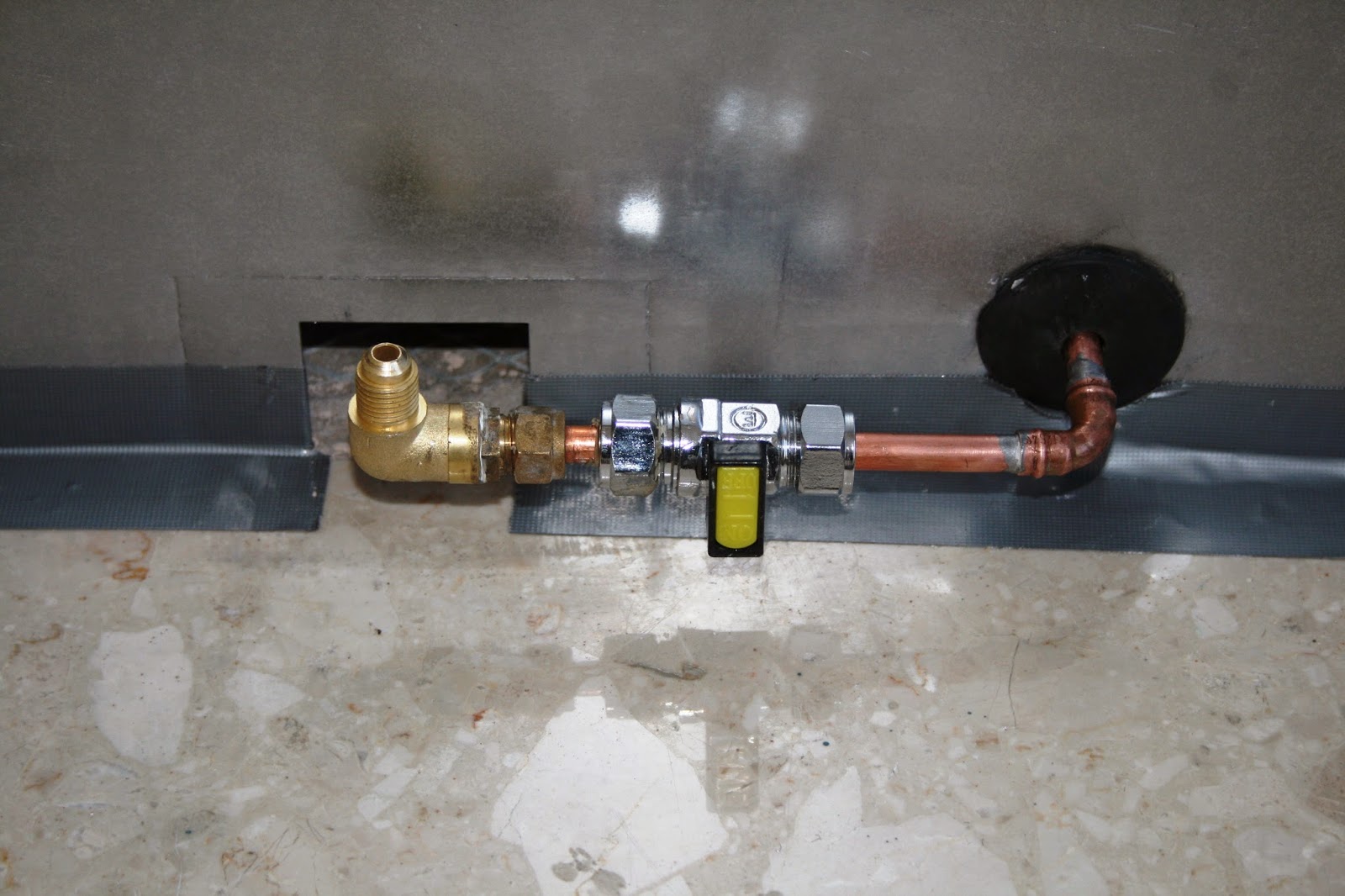
This series of pictures shows the installation of a Robinson Willey 'Firegem' gas fire. It's a basic, no frills, radiant convector fire. We have fitted thousands of them over the years mainly in private rented accommodation and social housing.       The first picture shows the correctly sealed closure plate and the supply pipe which on this job is concealed. Note the air relief opening in the bottom centre of the plate. We have also serviced thousands of these fires. An essential part of the service is to remove the closure plate and check the builders opening is of correct dimension, fully sealed and clear of debris. One of the commonest faults we find is incorrectly sized openings. Indeed this opening wasn't quite right and required some slight modification work which you can see above the plate.                                                  
Picture 2 shows the supply pipe cut to size and a gas service cock fitted A flue flow test has been carried out and it's all ready for the fire to go on now.   Picture 3 shows the fire fitted securely to the wall. The gas has been tested for tightness and the gauge is now connected to the fire to measure the burner pressure. A spillage test is then carried out to ensure the flue is removing all of the products of combustion. The final picture shows the finished article with the front cover now fitted. We just need the painter to make good to our little bit of patch plastering and that's it. Note that no closure plate tape should be visible above the fire once fitted. If it is it suggests that the builders opening is too high or the plate hasn't been cut correctly to size.                                                                
   This is the hearth standing version. It can be wall hung if the feet are removed. The builders open for a wall hung fire is different to that of a hearth standing one. It is smaller in height and higher off the floor due to there being no hearth. We still often find these fires fitted freestanding on hearths with no fixings to the wall. The only thing holding them is the gas pipe! Even if hearth mounted they must be securely fixed to the wall.                                                               If you are a landlord or letting agent and need any advice about suitable fires for rented accommodation please free to get in touch. Also if you have any concerns about chimneys or correct sizes for builders openers for these or any other fires we are happy to advise.                                                        

Wednesday, 19 March 2014

Commercial Water Heater Maintenance

Here I am swapping a sacrificial anode on an Andrews water heater during some commercial boiler room maintenance. It is for a for a health centre for whom we have just taken over the maintenance.
Sacrificial Anodes are highly active metals that are used to prevent a less active material surface from corroding.  They are created from a metal alloy with a more negative electro-chemical potential than the other metal they are being used to protect.  The sacrificial anode will be consumed in place of the metal it is protecting, which is why it is referred to as a "sacrificial".
If you would like to discuss any maintenance of commercial equipment such as this we are always happy talk and hopefully help you

Saturday, 15 March 2014

Gas Safe Work Inspection

Here's John carrying out a gas tightness test during a recent visit from the 'Gas Safe' inspector. This test is to check that there are no leaks on the installation. Our work gets inspected at regular intervals to ensure we meet the high standards of safety required. The tightness test is always one the favourite tasks the inspector asks us to perform.
The inspector normally asks to see three recent gas jobs. On this visit we took him to the new build site we completed last month where there were nine bungalows to choose from.
I first registered with C.O.R.G.I. the predecessor of 'Gas Safe' way back in 1985. The gas U-gauge or manometer in the pictures is the one I used for my first inspection which those in the trade will recognise as the tough old Abbirko traditional model. It is still going strong now and still in active use all these years on. We do of course carry equipment in our vans to enable this test to be done electronically. This is done with our flue gas analysers and is useful because it enables us to do a print out of the result. If you have any questions or queries about testing gas installations please feel free to contact me.

Thursday, 6 March 2014

Protect Your Boiler

 New boilers cost a lot of money so it is crazy not to protect your investment. This curious looking fitment is the Worcester Greenstar System Filter. It's not the easiest object to get an interesting photo of but it is worth investing in one for two very good reasons ~
{1}It has been specifically designed to combat the damaging effects of
any debris and pollutants within your heating system by trapping them.
{2} When fitted with a new Worcester boiler it earns you an extra year on the warranty.
At its centre is a very powerful integral magnet that catches and retains any metallic debris that is present in the system heating water. Any non-magnetic debris is caught by the twin-action cyclonic trap. They can be cleaned each year during the annual service or sooner if need be.
They are sited on the boiler return pipe and as such ideally suited when boilers are hidden in cupboards so they are concealed but still easily accessible. They cost around £120 which is a small price to pay for something that protects your boiler 24 hours a day, everyday.
Please do contact me if you'd like to know more about this or any other brand of magnetic filter.

Wednesday, 5 March 2014

A Nice Money Saver - The FW100 Weather Compensation Controller

This unit is a weather compensation controller. It is linked up to your boiler and an outdoor sensor. It may sound complicated but for us, they are fairly easy to install. They don't cost a great deal more than a typical wireless programmable room thermostat either. It can fit on the fascia of your Worcester boiler or be wall mounted remotely like a room thermostat {as this one is}. They are about the same size as a typical programmer.  It enables your boiler to anticipate changes in heating demand in relation to external temperatures and regulate accordingly. Or to put it another way; it will save you money! If you have any questions or enquiries about 'Intelligent Controls' as these types of control are called please feel free to e-mail or call me.


Monday, 19 August 2013

New Build Site

We are currently carrying out the plumbing, heating and gas installation in nine new build bungalows.
 Here is Joe one of our engineers installing first fix pipework prior to plasterers coming in. All the plumbing and heating pipes are in plastic due to cost and to deter theft as it has no scrap value. This seems to be the case now in all new build schemes.

This is a pipe drop which will be serving a radiator. It is enclosed in capping and will be covered over by plasterboard. A metallic tape is stuck onto the face of the capping so the presence of the pipes can be detected later with a cable / metal detecting device. There are blanks on the end of the pipes so we can pressure test them.
 10mm branches off the main heating circuit are routed to radiator positions in one continuous run without the need for joints.